












There is a small, quiet moment on a wedding day that most people never think about until it arrives. The rings are ready, the vows are said, and suddenly you are looking down at your hand wondering which piece slides on first. It feels like it should be obvious. It rarely is.
This question comes up more often than you might expect, and the answer carries a little more meaning than simple stacking order. The way you wear your engagement ring and wedding band reflects tradition, comfort, and your own personal style. Understanding the reasoning behind the order helps you feel confident on the day and every day after.
By the end of this guide, you will know exactly which ring goes on first, why tradition places them in that order, and how to make the arrangement work beautifully for your hand. You will also learn a few practical tricks that jewelers quietly recommend to keep both rings looking their best for decades.
The Traditional Wedding Ring Order Explained

first, closest to your heart, followed by your engagement ring.
This tradition traces back to an old belief that a vein ran directly from the fourth finger of the left hand to the heart. The Romans called it the vena amoris, or the vein of love. Placing the wedding band nearest to that finger's base symbolized keeping your marriage vow closest to your heart, with the engagement ring sitting just above it as the piece that began the journey.
There is a practical layer to this tradition too. The wedding band represents the promise fulfilled, while the engagement ring marks the promise made. Wearing them in that sequence tells a quiet story, from the proposal to the union, every time you glance at your hand.
How to Wear Your Engagement Ring and Wedding Band on the Day

The wedding day itself has its own small choreography, and knowing it ahead of time saves a moment of fumbling at the altar.
Here is how the order typically works:
-
Before the ceremony, many brides move their engagement ring to their right hand. This keeps the left ring finger clear so the wedding band can be placed during the vows.
-
During the ceremony, your partner slides the wedding band onto your bare left ring finger, closest to the base.
-
After the ceremony, you move your engagement ring back to the left hand, settling it above the wedding band.
This sequence keeps the symbolism intact and avoids any awkward shuffling while everyone is watching. It is a tiny piece of planning that makes the moment feel effortless.
Which Ring Goes First on the Finger for Everyday Wear
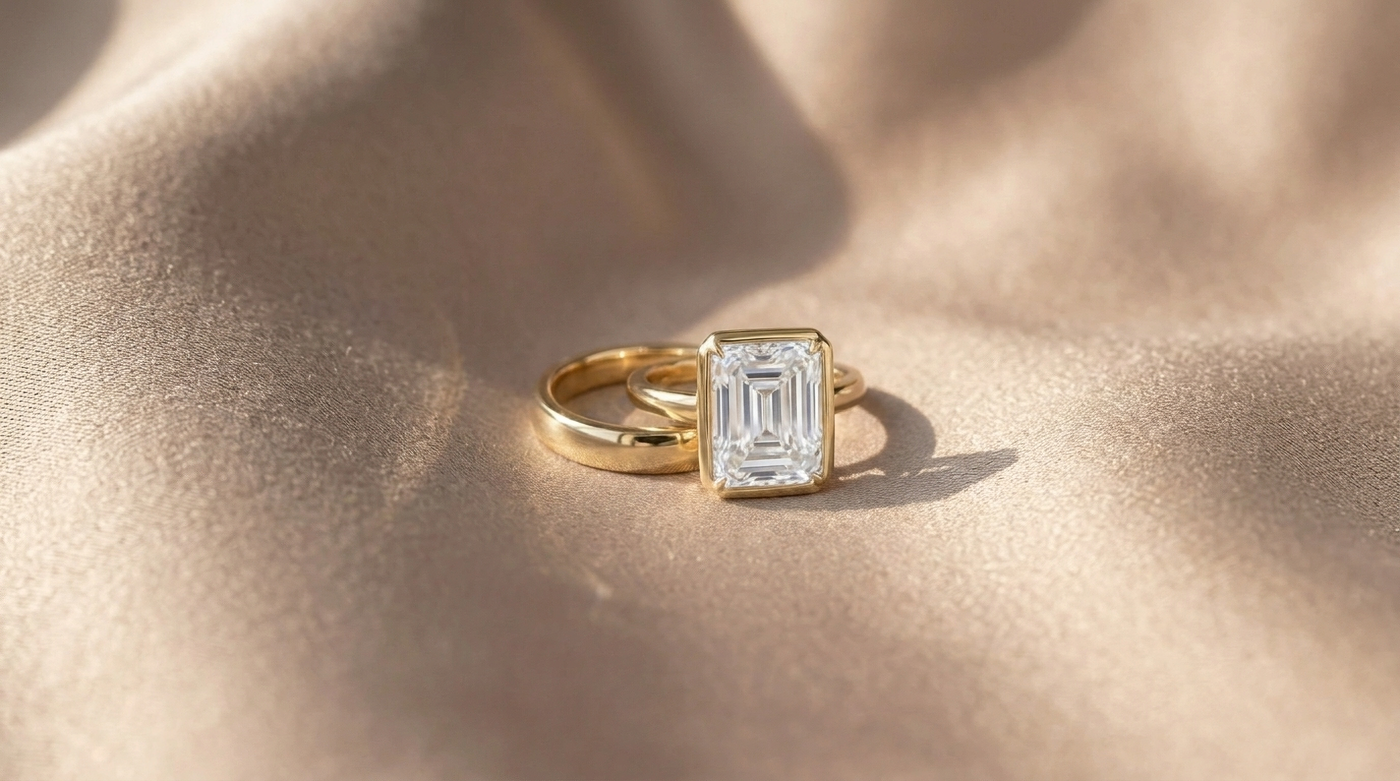
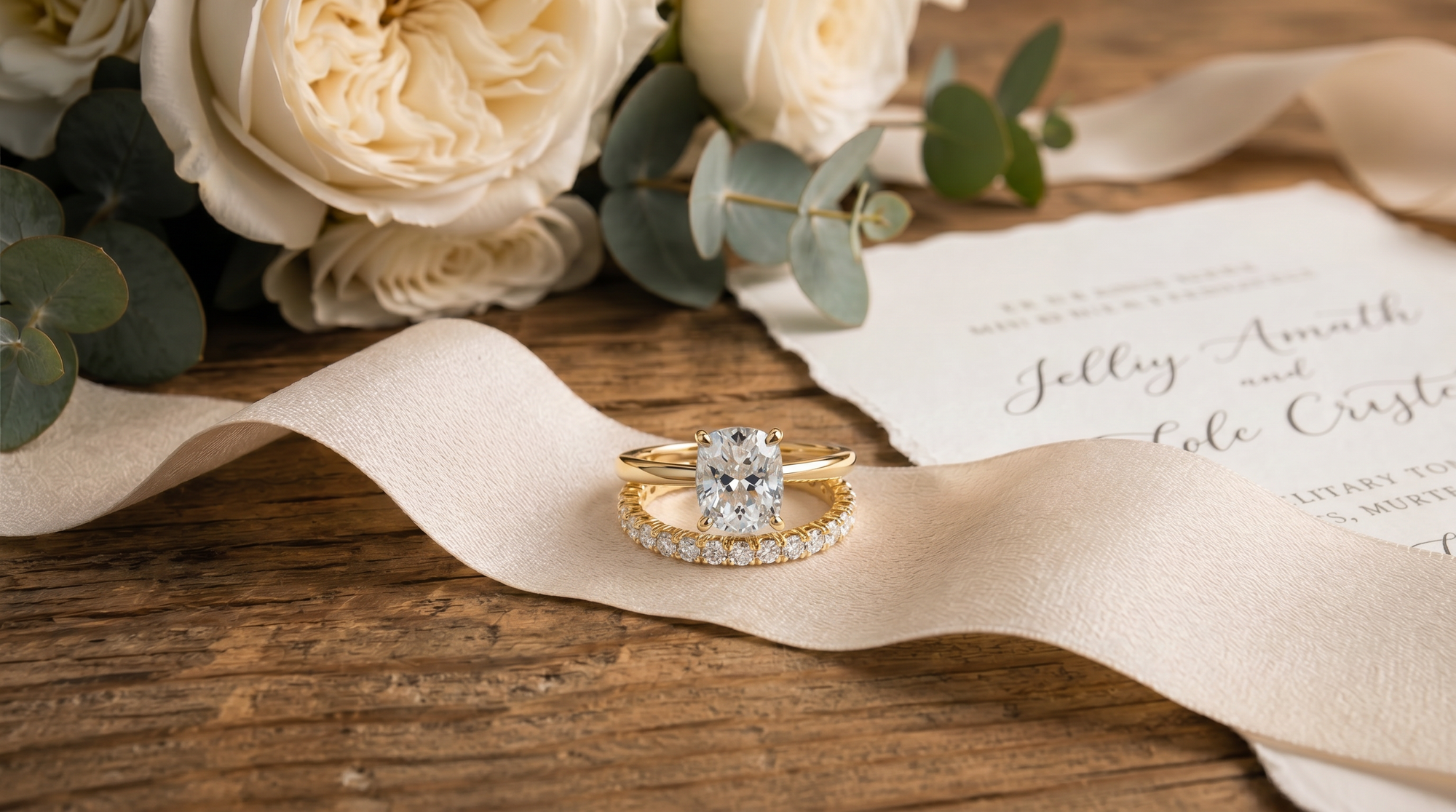
Once the wedding day passes, the daily question becomes how to keep the rings comfortable and secure. The traditional order still applies, with the wedding band sitting below the engagement ring.
A few reasons this arrangement works well day to day:
-
Symbolic continuity: The band stays closest to your heart, honoring the original meaning.
-
Visual balance: The engagement ring, often the more detailed piece, sits on top where its design is fully visible.
-
Secure fit: A snug band below helps anchor the engagement ring and reduces spinning.
That said, tradition is a guide, not a rule. Some people prefer the reverse order, placing the engagement ring below the band because it feels more comfortable or simply looks better to them. Your hand, your choice. The most important thing is that both rings feel good and stay put.
Engagement Ring and Wedding Band Stacking and Fit

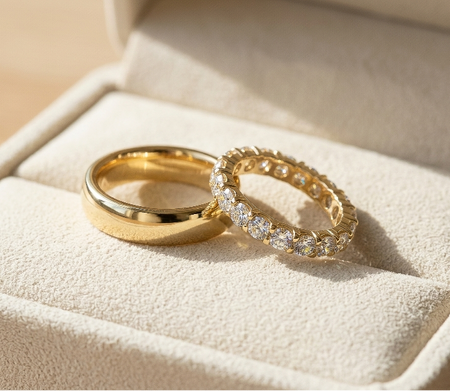
The way two rings sit together is what jewelers call stacking, and it is where comfort meets style. Not every engagement ring and band pair perfectly out of the gate, and that is completely normal.
When you choose your rings, consider how their profiles meet:
-
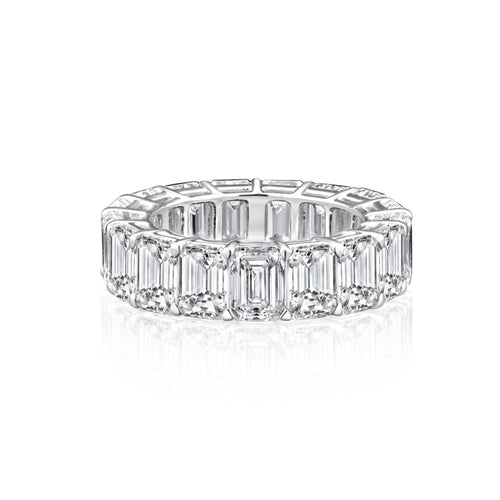
Contoured bands are shaped to curve around the engagement ring, sitting flush with no gap.
-
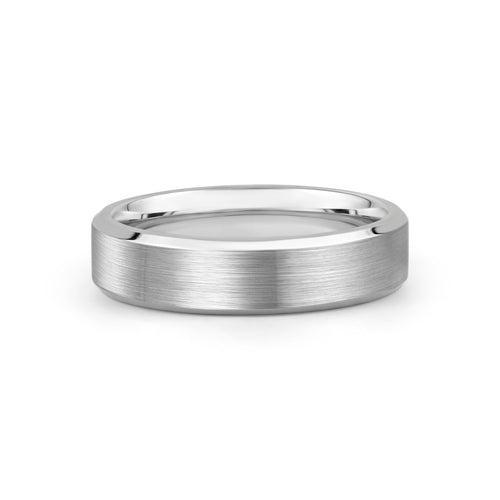
Straight bands offer a clean, classic look but may leave a small space against a ring with a low-set center stone.
-
Matching sets are designed as a pair from the start, which removes the guesswork entirely.
If you fell in love with your engagement ring first and are now choosing a band to complement it, our team can help you find a piece that fits naturally. Explore options in our women's wedding band collection or our men's wedding band collection, and remember that a custom design is always possible when you want something made to fit perfectly.
Should You Solder Your Rings Together?
For many people, the spinning, gapping, and constant readjusting of two separate rings eventually leads to one question: should the rings be joined? Soldering, the process of fusing your engagement ring and wedding band into a single unit, is a popular and reversible-with-care solution.
Soldering offers a few clear benefits:
-
No more spinning or separating, since the rings move as one.
-
Even wear on both bands, which reduces metal thinning over time.
-
Easier daily wear, with one ring to slide on instead of two.
There are trade-offs worth weighing. Once soldered, you lose the flexibility to wear the rings separately or to move the engagement ring to your right hand. Resizing also becomes a little more involved. A conversation with an experienced jeweler helps you decide whether soldering suits your lifestyle. Our jewelry repair and services team can walk you through the options and handle the work with the precision your rings deserve.
Do You Have to Wear Your Engagement Ring With Your Wedding Band?

Not at all. While the two rings are often worn together, plenty of people choose to wear them differently, and there is no wrong approach.
Some common preferences include:
-
Wearing both rings stacked every day, the most traditional choice.
-
Reserving the engagement ring for special occasions and wearing only the band day to day.
-
Wearing the engagement ring on the right hand and the wedding band on the left.
-
Switching between arrangements depending on the activity or outfit.
Your rings are yours to enjoy in whatever way feels right. The tradition exists to guide you, not to bind you.
Finding the Right Rings for Your Hand
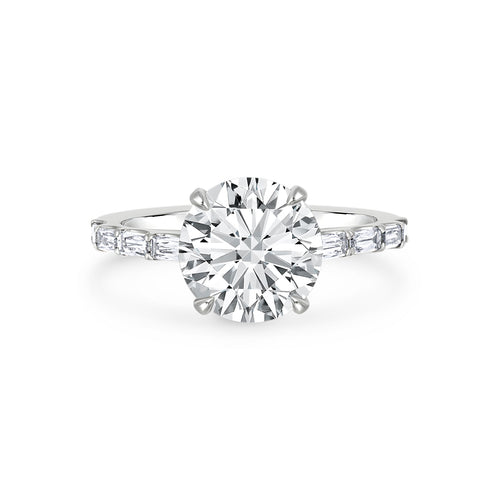
The order your rings go on is a lovely detail, but it all starts with choosing pieces you truly love. A well-matched engagement ring and band, fitted to your hand and your life, make the question of order feel natural rather than complicated.
At Polacheck's Jewelers, our fourth-generation family of experts has spent more than a century helping couples find rings that hold meaning for a lifetime. Whether you are beginning with an engagement ring or completing a set with the perfect band, guidance is always part of the experience.
Take your time, trust your instinct, and let your rings tell your story in the order that feels right to you. When you are ready to find or complete your set, we would love to welcome you. Schedule a private consultation with our team and let us help you wear your love beautifully.
Frequently Asked Questions
Which ring goes on first, the engagement ring or the wedding band?
Traditionally, the wedding band goes on first, closest to the base of your finger and your heart, with the engagement ring stacked above it. This order symbolizes keeping your marriage vow nearest to your heart. You are always free to reverse the order if it feels more comfortable for you.
Why does the wedding band go closest to the heart?
The custom comes from the ancient belief in the vena amoris, a vein thought to run from the fourth finger directly to the heart. Placing the wedding band closest to the finger's base honors the marriage vow as the piece nearest that symbolic connection. The engagement ring then sits above as the ring that began the story.
How do I wear my engagement ring during the wedding ceremony?
Many brides move the engagement ring to the right hand before the ceremony so the left ring finger is bare for the wedding band. After the band is placed during the vows, you move the engagement ring back to the left hand, settling it above the band. This keeps the traditional order intact without any fumbling.
Should I solder my engagement ring and wedding band together?
Soldering fuses the two rings into one unit, which stops spinning, promotes even wear, and makes daily wear easier. The trade-off is losing the ability to wear the rings separately and a slightly more involved resizing process. An experienced jeweler can help you decide whether it fits your lifestyle.
Do I have to wear my engagement ring with my wedding band?
No. Some people stack both rings daily, while others wear only the band for everyday life and save the engagement ring for special occasions. You can also wear them on separate hands. The choice is entirely personal.
What if my engagement ring and wedding band do not sit flush together?
A gap between the rings is common, especially with straight bands and low-set center stones. A contoured band shaped to your engagement ring usually solves it, and a custom band can be made to fit perfectly. A jeweler can also adjust or pair your rings so they nest comfortably.