







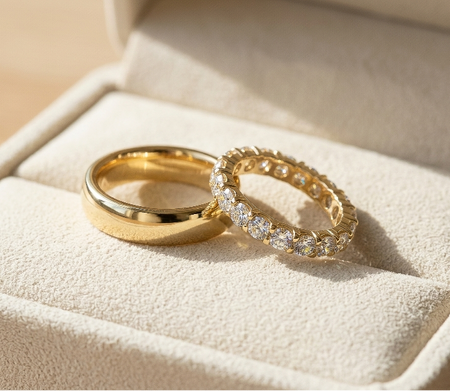

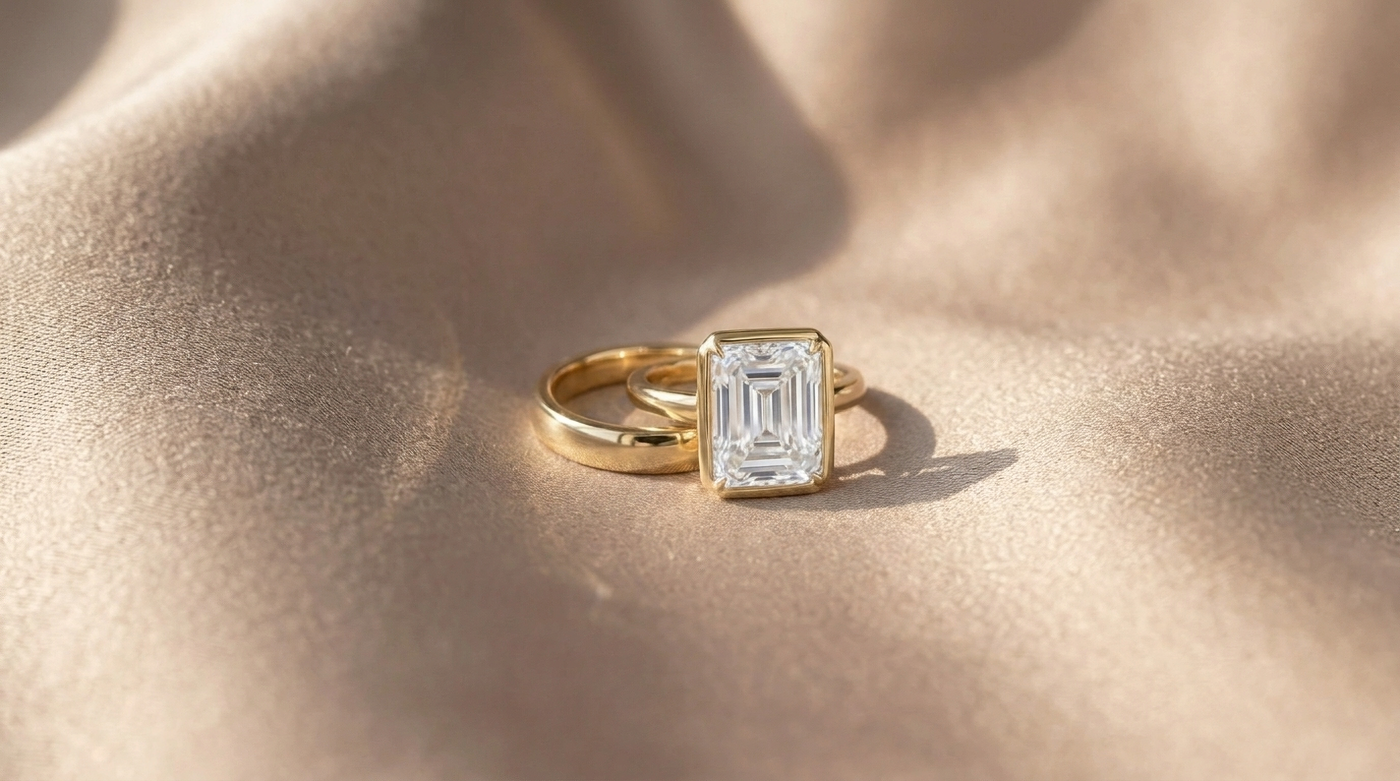


Most people spend months choosing an engagement ring and a single afternoon choosing the band that will sit beside it for the rest of their lives. The band deserves more thought than that. It frames the center stone and touches your engagement ring every hour of every day.
Knowing how to match a wedding band to an engagement ring comes down to a handful of relationships. Metal pairs with metal, and silhouette pairs with silhouette. Once you understand those relationships, the decision feels far less overwhelming, whether you want a seamless matched set or a deliberate contrast.
In this guide, you will learn how to read the engagement ring you already own, which band profiles solve which fit problems, when mixed metals look intentional, and how to build a stack that still feels balanced in 10 years. Polacheck’s Jewelers has walked couples through this decision for four generations, and the same principles our team uses at the counter apply here.
Start With the Ring You Already Own

Before you look at a single band, study the ring on your finger. Every wedding band and engagement ring pairing begins with a few details that decide what will sit flush and what will leave a gap.
- Setting height. A high-set solitaire leaves room beneath the stone for a straight band. A low-profile or bezel setting usually needs a band with a curve or a notch.
- Band width. A delicate 1.5 mm engagement ring band looks best beside a band of similar scale. A wider band can overwhelm a slender ring unless you want that contrast.
- Shank details. Pavé diamonds, a split shank, or a cathedral setting all change how a second ring meets the first.
- Finish. High polish, satin, or hammered textures should either match or contrast on purpose.
Try a simple test at home. Press a plain ring against your engagement ring while wearing both. If the plain ring sits flat, straight bands are an option. If it rocks or leaves a visible gap, focus on contoured styles.
Wedding Band Styles for Solitaire Engagement Rings

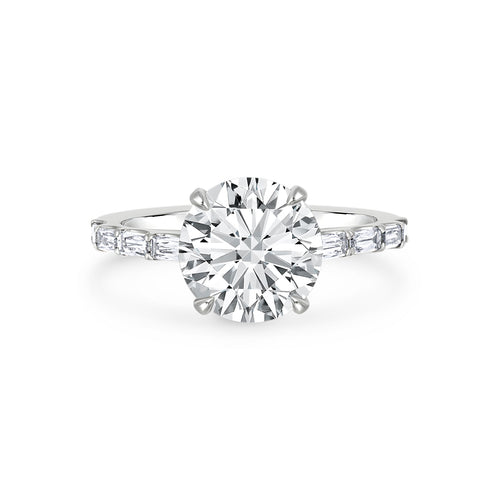
A solitaire pairs with almost anything, which is exactly why the choice can feel paralyzing. The real question is what kind of statement you want the pair to make.
The table below shows how the most common wedding band styles for solitaire engagement rings change the finished look.
|
Band style |
Effect with a solitaire |
Best for |
|
Plain metal band |
Keeps every eye on the center stone |
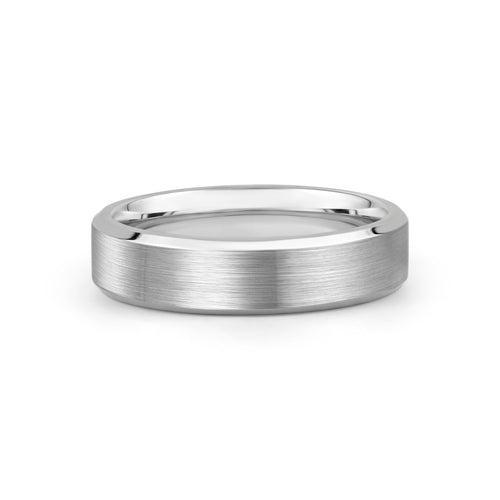
Classic, minimal taste |
|
Pavé or channel-set band |
Adds sparkle at the base of the stone |
Brides who want more brilliance |
|
Eternity band |
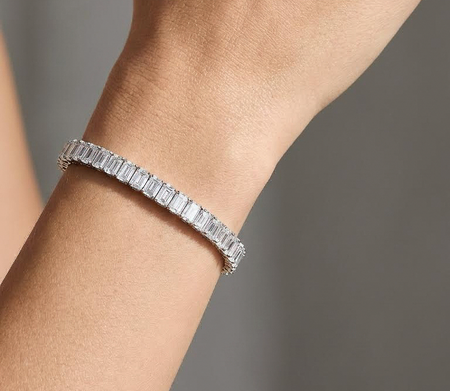
Wraps the finger in a continuous line of light |
Anniversary upgrades and bold styling |
|
Contoured band |
Hugs the setting so both rings sit flush |
Low-profile or wide-stone settings |
|
Chevron band |
Frames the stone like an arrow pointing to it |
Pear, marquise, and oval cuts |
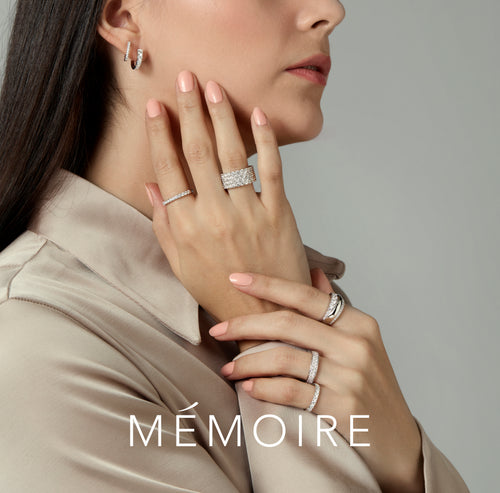
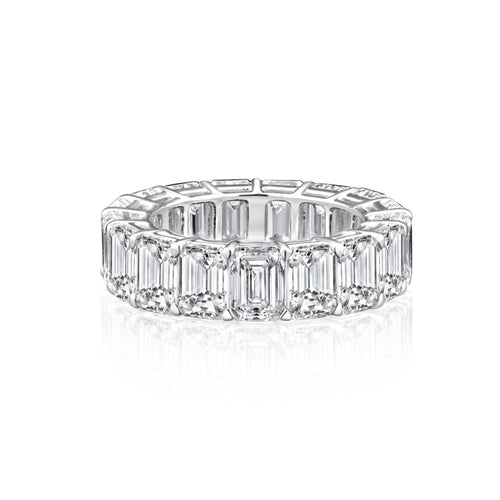
For a solitaire with a slim shank, a 2 mm to 2.5 mm diamond band from a house like Memoire tends to feel proportionate. Explore our Memoire bands to see how a well-cut eternity band changes the entire silhouette.
Curved Wedding Band for Engagement Ring Settings That Sit Low
Some engagement rings refuse to sit beside a straight band. Halos, bezels, wide oval and cushion settings, and many vintage-inspired designs extend below the finger’s natural line, and they push a straight band away, leaving a sliver of empty space between the two.
A curved wedding band for engagement ring styles like these solves the problem gracefully. The curve follows the outline of your setting so the two rings nest together instead of wedging apart.
Keep a few points in mind as you compare curved bands.
- Match the curve to the stone cut. A gentle arc suits a round halo. A deeper contour suits pear and marquise cuts.
- Favor a soft curve over a dramatic one. Subtle contours still look intentional if you ever wear the band on its own.
- Consider a custom fit. For a truly seamless nest, our master jewelers can cut a band to your exact ring. Our workshop makes every piece in the Polacheck’s Collection in-house, which means the fit is precise instead of approximate.
- Try the band solo. A band you love on its own will serve you well on days you leave the engagement ring at home.
If your engagement ring came from our Polacheck’s Collection engagement rings, we can often design a companion band from the original specifications, so the match is exact down to the millimeter.
Mixing Metals Wedding Band Engagement Ring Combinations That Work

The old rule said your band and ring must share the same metal. Couples have relaxed that rule considerably, and mixing metals wedding band engagement ring pairings now rank among the most requested looks in our showroom.
- Mixed metals work when the contrast feels deliberate and fall flat when the pairing looks accidental. A few guidelines help.
- Yellow gold engagement ring with a platinum or white gold band. Crisp and modern, and the cool band makes a white diamond pop against the warm ring.
- Platinum engagement ring with a rose gold band. Adds warmth and softness to a cool, contemporary setting.
- Two-tone engagement ring with a band in either metal. Pick whichever tone you want to emphasize, and both will read as coordinated.
- Yellow gold with rose gold. Beautiful, but keep the tones close so the pair looks curated instead of mismatched.
If you feel unsure, choose a band that echoes the metal of your prongs or halo instead of the shank. The band and the setting then share a visual thread even where the shank differs.
One practical note. Platinum and gold wear at different rates. Platinum is denser and harder, so a platinum band sitting beside a yellow gold ring can slowly wear the gold at the point of contact. Regular checkups with our in-house jewelers keep both rings in good condition.
Stacking Wedding Band With Engagement Ring for a Balanced Look

Stacking has become an art of its own, and the wedding band often serves as the foundation of the stack. Whether you plan to add an anniversary band later or want a fuller look from day one, a little planning now keeps the stack from feeling crowded.
Here are four layouts for stacking wedding band with engagement ring pieces.
- Classic pair. Engagement ring plus one band on the same finger, with the band closest to the heart.
- Bookend stack. Engagement ring in the center with a band on either side, ideal for symmetry and for eternity bands.
- Freeform stack. Mixed widths, textures, and metals across one or two fingers, with the engagement ring and wedding band as the anchors.
- Split stack. Engagement ring on one hand and a stack of bands on the other, a favorite for brides who want the center stone to stand alone.
A few habits keep any stack balanced.
- Vary width slightly instead of dramatically.
- Repeat at least one element across the rings, such as metal, diamond size, or finish.
- Leave the engagement ring as the tallest point so the eye still lands on the center stone.
- Leave a little room for growth, since anniversaries have a way of adding rings.
Browse our women’s wedding bands to see how eternity, half-eternity, plain, and textured bands layer together, and explore our men’s wedding bands for partners who want a coordinated metal or finish without a matching set.
Matching Wedding Band to Engagement Ring Checklist

Dozens of options at the counter can blur together. Run through this short list before you commit to a matching wedding band to engagement ring choice.
- Does it sit flush? If not, look at contoured or custom-fitted bands.
- Is the width proportionate? Similar scale reads as a matched look, and deliberate contrast reads as modern.
- Do the metals complement each other? Same metal for seamless, mixed metals for character.
- Does the finish agree? High polish beside high polish, or a purposeful play of polished and brushed.
- Will it still work in 10 years? Think about anniversary bands and everyday wear as well as the wedding day.
- Does it feel like you? The best pairing is the one you never want to take off.
Two Rings, One Story
Your engagement ring marked a beginning. Your wedding band marks a promise kept. Together, the two tell that story every time you glance at your hand.
If you would like a second opinion, or a band cut precisely to the ring you already love, our team would be glad to help. Reach out to schedule a private consultation and bring your engagement ring along. We will find the pairing that looks like it belonged together from the start.
Frequently Asked Questions
Does your wedding band have to match your engagement ring?
No. A matched set is timeless, but mixed metals and contrasting widths look beautiful when you choose them on purpose. The most important factor is that the two rings sit comfortably together and reflect your style.
Which ring goes on first, the wedding band or the engagement ring?
Tradition places the wedding band closest to the heart, so it goes on the finger first with the engagement ring above it. Many couples follow this order, though some reverse it for comfort or to keep a contoured band aligned with the setting.
What wedding band goes best with a solitaire engagement ring?
A solitaire pairs well with almost any band. A plain band keeps the focus on the center stone, while a pavé or eternity band adds sparkle. Match the band width to the engagement ring shank for the most balanced look.
Can you wear a straight wedding band with a halo engagement ring?
Sometimes, but many halo settings sit low enough that a straight band leaves a visible gap. A contoured band usually nests more cleanly beneath a halo. Bring your ring in and we can test both options on your finger.
Is it okay to mix gold and platinum wedding rings?
Yes. Mixed metals enjoy wide acceptance and can make a diamond appear brighter. Platinum is harder than gold, so periodic inspections help prevent uneven wear where the two rings touch.
Can a jeweler make a custom wedding band to fit my engagement ring?
Absolutely. Our in-house master jewelers can design a band that follows the exact contour of your engagement ring for a flush, seamless fit. Custom bands help most with unusual stone cuts and heirloom rings.