










There is a quiet moment that often comes just after a proposal. You are admiring the ring on your finger, the light catching every facet, and someone leans in and asks is an engagement ring and a wedding ring the same? It is one of the most common questions we hear in the world of fine jewelry, and the answer carries more meaning than you might expect.
At Polacheck's Jewelers, we have helped four generations of couples mark these milestones. The question of whether an engagement ring and a wedding ring are the same comes up almost daily, and the answer is layered with tradition, design, and personal meaning.
In this guide, you will learn:
-
What sets each ring apart in purpose and design
-
How the two pieces are traditionally worn together
-
What to consider before choosing your own
Is an Engagement Ring and a Wedding Ring the Same Piece of Jewelry?
The short answer is no. An engagement ring and a wedding ring are two distinct pieces, each with its own role in the journey toward marriage. They are often worn together on the same finger, which is part of why so many people wonder if they are interchangeable.

Here is the simplest way to think about the distinction:
-
Engagement ring: Given at the moment of the proposal. Marks the promise of marriage to come.
-
Wedding ring: Exchanged between partners during the marriage ceremony. Marks the lifelong commitment itself.
Many couples choose to coordinate the two so they sit beautifully side by side. Others treat them as separate expressions of style and meaning. Both approaches are valid, and the decision often comes down to personal taste, family tradition, and the kind of story you want your jewelry to tell.
What Sets an Engagement Ring Apart
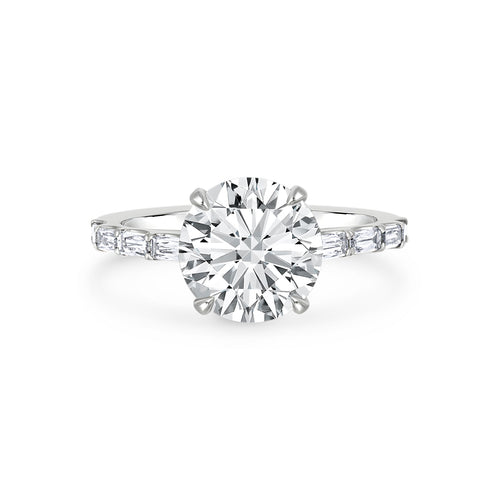
The engagement ring is the more elaborate of the two. It traditionally features a center stone, most often a diamond, set into a band of gold or platinum. The design is meant to be noticed, since it announces a new chapter to the world.

Popular engagement ring styles include:
-
Classic solitaire: A single center stone on a clean band, timeless and elegant
-
Three-stone setting: Often said to represent the past, present, and future
-
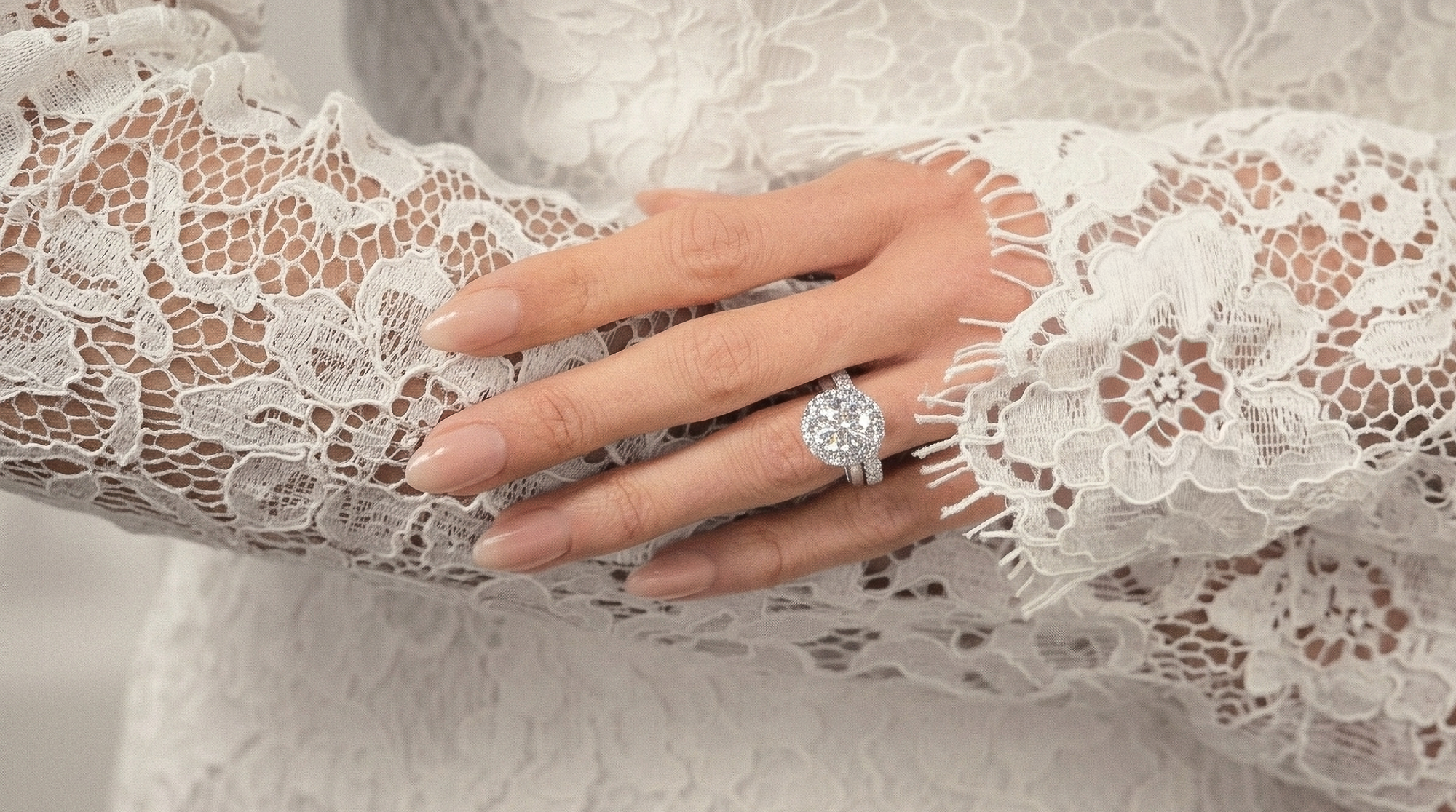
Halo: A center stone surrounded by smaller diamonds for added brilliance
-
Vintage-inspired: Intricate detail work, milgrain edges, and old-world charm
-
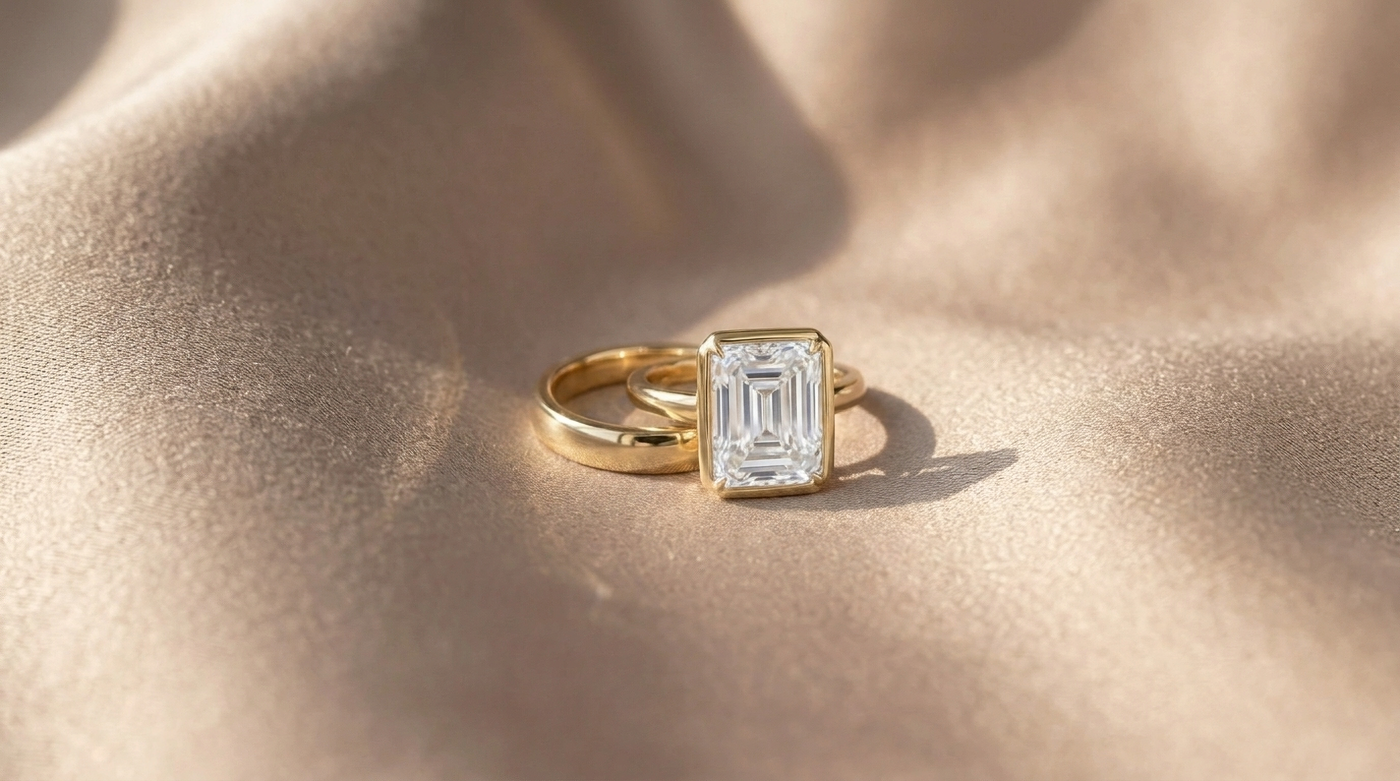
East-west: A horizontally set stone for a modern, distinctive look
Some clients fall in love with a center diamond first and build the ring around it. Others arrive at our showroom with a clear vision and work with our in-house design team to bring it to life as a one-of-a-kind creation. You can explore our engagement ring collection to see the range of styles we offer in store and online.
What unites every engagement ring, regardless of style, is its purpose. It is the piece that begins the story, the one that lives on your finger during every detail of wedding planning, and the heirloom that often passes through generations.
What Defines a Wedding Ring
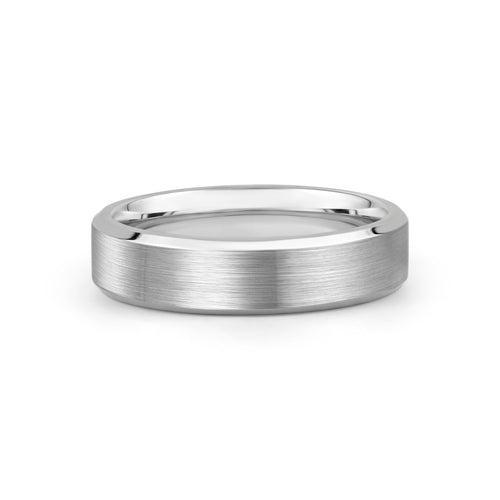
The wedding ring tends to be quieter in design but no less meaningful. Traditionally a plain or subtly detailed band, it represents the unbroken circle of marriage. Both partners typically wear one, exchanged during the ceremony itself in the moment of "I do."

Modern wedding bands have grown in variety to match the personalities of those who wear them. Common styles include:
-
Plain metal bands: Slim or wide, polished or matte, in platinum, yellow gold, white gold, or rose gold
-
Diamond-accented bands: A row of small stones set partway around the band
-
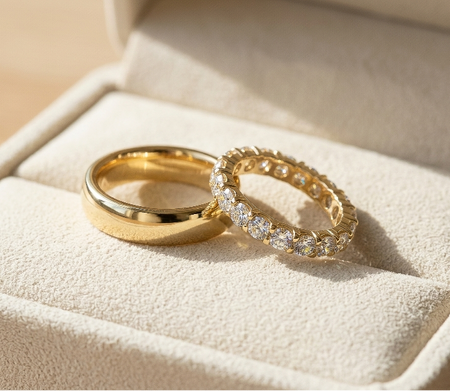
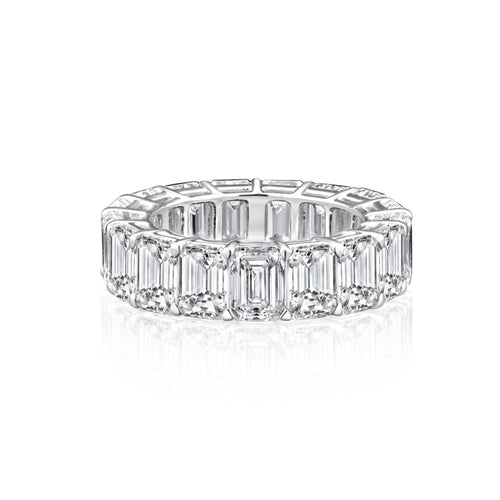
Eternity bands: Diamonds or gemstones set fully around the entire band
-
Hammered or textured finishes: A handcrafted, organic look
-
Custom-matched bands: Designed specifically to nest with your engagement ring
You can browse our women's wedding bands and men's wedding bands to find pieces that reflect your individual style or work beautifully as a matched set.
The wedding ring is often the piece you wear every single day, through every season of life. For that reason, we encourage couples to think carefully about comfort, fit, and durability when making their selection. A ring you wear forever should feel as good as it looks.
Engagement Ring vs. Wedding Ring at a Glance

If you are weighing the two side by side, this comparison should help you see the differences clearly. Use it as a quick reference when you visit our showroom or begin your search through our signature ring collection online.
|
Feature |
Engagement Ring |
Wedding Ring |
|
Purpose |
Symbolizes the proposal and the promise of marriage |
Symbolizes the marriage itself, exchanged in the ceremony |
|
When given |
At the moment of the proposal |
During the wedding ceremony |
|
Traditional design |
Features a center stone, most often a diamond |
Plain or subtly accented band |
|
Worn by |
Traditionally one partner, increasingly both |
Both partners |
|
Style |
More elaborate, often a statement piece |
Simpler, designed to complement the engagement ring |
|
Typical investment |
Higher, driven by the center stone |
Lower, although designer or eternity bands can vary |
|
Symbolism |
The promise of marriage to come |
The unbroken circle of lifelong commitment |
How you wear the two pieces is just as personal as how you choose them. A few common approaches:
-
Stacked traditionally: The wedding band is placed on the finger first during the ceremony so it sits closest to the heart, with the engagement ring stacked on top afterward.
-
Worn on separate hands: Engagement ring on one hand, wedding band on the other.
-
Soldered together: Joined by a jeweler for a single, seamless look that never shifts.
There is no wrong way, only the way that feels right for you.
Conclusion
Whether you are beginning your search for an engagement ring, planning your wedding bands, or simply curious about the meaning behind each piece, the difference between the two is a small but lovely detail of a much larger story. Each ring marks a moment worth remembering.
When you are ready to explore your options, we invite you to schedule a private consultation with Polacheck's. Our team would be honored to help you find pieces that will be treasured for generations.
Frequently Asked Questions
Can you wear an engagement ring as a wedding ring?
You can, and some couples do choose to use a single ring for both purposes. However, most traditions involve two separate rings, with the engagement ring marking the proposal and the wedding band exchanged during the ceremony. If a single ring feels right for you, our designers can help you select or create one that carries the meaning of both.
Which finger does the wedding ring go on?
In most Western traditions, both the engagement ring and the wedding ring are worn on the fourth finger of the left hand, often called the ring finger. The custom dates back to an old belief that a vein in this finger ran directly to the heart. Some cultures and regions place the wedding ring on the right hand instead, so family tradition often guides the choice.
Do you wear your engagement ring on your wedding day?
Many brides choose to move the engagement ring to the right hand during the ceremony, allowing the wedding band to be placed first on the left ring finger. After the ceremony, the engagement ring is returned to the left hand so it sits above the wedding band, closer to the heart. This is tradition, not a rule, so do whatever feels meaningful to you.
Should engagement rings and wedding bands match?
Matching is entirely a matter of personal preference. Some couples choose bands that complement the engagement ring in metal and style for a cohesive look. Others prefer contrast, mixing metals or textures for a more individual feel. Our team can help you preview different pairings in person before you decide.
Are wedding rings more expensive than engagement rings?
Engagement rings are typically the larger investment because they often feature a significant center stone. Wedding bands tend to be simpler in design and lower in cost, although elaborate eternity bands or designer pieces can rival the price of an engagement ring. The right balance depends on your priorities and your overall budget.
Do both partners wear an engagement ring?
Traditionally, only one partner wore an engagement ring, but that has changed in recent years. Many couples now choose engagement rings for both partners as a shared symbol of commitment. The styles can match or differ, and there is no expectation either way.